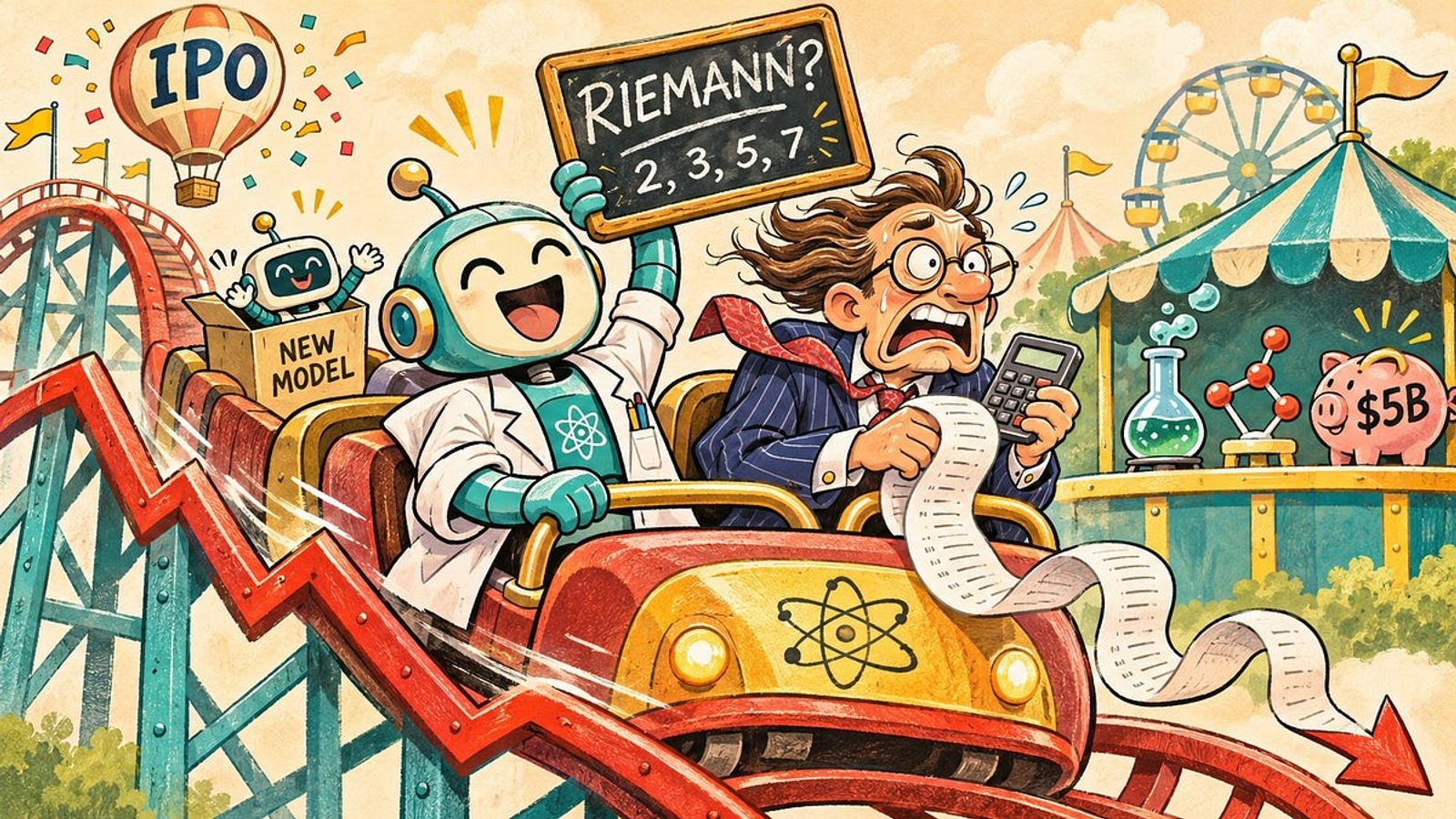
Anthropic's highly anticipated IPO, initially valued at $1.5 trillion, saw its stock fall 9.3% on its first trading day. The broader AI sector's decline contributed to the S&P 500's worst weekly loss in over 18 months, officially entering a correction.
TL;DR
- Anthropic's IPO, the largest on record, underperforms as AI stocks tumble.
- S&P 500 enters correction territory, down 3.7% on the day and 10% from its October high.
- Nasdaq composite turns negative for the year, falling 5.3% on the week.
What happened
Anthropic, the maker of the Claude AI tool, began trading at $83 per share, valuing the company at $1.5 trillion. However, its stock fell 9.3% to $88.14 by the end of the day, marking a significant drop from its brief peak of $115.10 the previous day. This underperformance mirrored the broader AI sector's decline, with major players like Nvidia and AMD experiencing substantial losses.
The S&P 500 fell 3.7% on the day, marking its worst weekly loss since April 2025. This decline pushed the index into correction territory, defined as a drop of more than 10% from its all-time high on October 6. The Nasdaq composite, heavily weighted with tech stocks, slumped 5.3% on the week, turning negative for the year. The Dow Jones Industrial Average, with less exposure to technology, fell 1.9%.
The sell-off in AI stocks was driven by concerns over their high valuations, heavy spending, and regulatory uncertainties following the midterm elections. Chip stocks, which have benefited from the AI data center boom, were among the hardest hit. Nvidia, a key player in the AI sector, fell 10.6% on the day, adding to its recent losses following the departure of its CEO, Jensen Huang.
Why it matters
For AI/ML developers and startup founders, the market correction highlights the volatility and regulatory risks associated with the AI sector. The sell-off may lead to a more cautious investment environment, potentially impacting funding opportunities for early-stage startups. However, it also presents opportunities for investors to acquire shares in leading AI companies at lower valuations.
The underperformance of Anthropic's IPO, despite its record valuation, signals a shift in investor sentiment towards the AI sector. This could lead to increased scrutiny of AI companies' financials and growth prospects, as well as a greater focus on regulatory compliance and sustainable business models.
The broader implications of the market correction extend beyond the AI sector. The sell-off in tech stocks has spread globally, with major indexes in Japan, South Korea, and Europe also experiencing significant declines. This highlights the interconnected nature of global markets and the potential for contagion effects in times of market stress.
Key facts
- Anthropic's IPO valued the company at $1.5 trillion, the largest on record.
- Anthropic's stock fell 9.3% on its first trading day, closing at $88.14.
- The S&P 500 fell 3.7% on the day, marking its worst weekly loss since April 2025.
- The Nasdaq composite turned negative for the year, falling 5.3% on the week.
- Nvidia's stock fell 10.6% on the day, adding to its recent losses following the departure of its CEO.
- Chip stocks, including AMD and Broadcom, experienced significant declines, with the PHLX Semiconductor Index sinking 9.2%.
- The sell-off in AI stocks was driven by concerns over high valuations, heavy spending, and regulatory uncertainties.
- The University of Michigan's consumer sentiment index rose sharply, indicating a reversal of the dynamic seen earlier this year.
Context
The recent market correction comes amid a period of significant growth and volatility in the AI sector. The rapid advancements in AI technology have led to soaring valuations for AI companies, attracting substantial investment and driving market gains. However, this growth has also raised concerns about a potential bubble in the sector, particularly as regulatory uncertainties and market risks come to the fore.
The underperformance of Anthropic's IPO, despite its record valuation, underscores the challenges facing AI companies as they navigate a complex regulatory landscape and market volatility. The sell-off in AI stocks highlights the need for sustainable business models and a focus on long-term growth prospects, rather than short-term gains.
The broader implications of the market correction extend beyond the AI sector, reflecting the interconnected nature of global markets. The sell-off in tech stocks has spread globally, with major indexes in Japan, South Korea, and Europe also experiencing significant declines. This highlights the potential for contagion effects in times of market stress and the importance of risk management in a volatile investment environment.