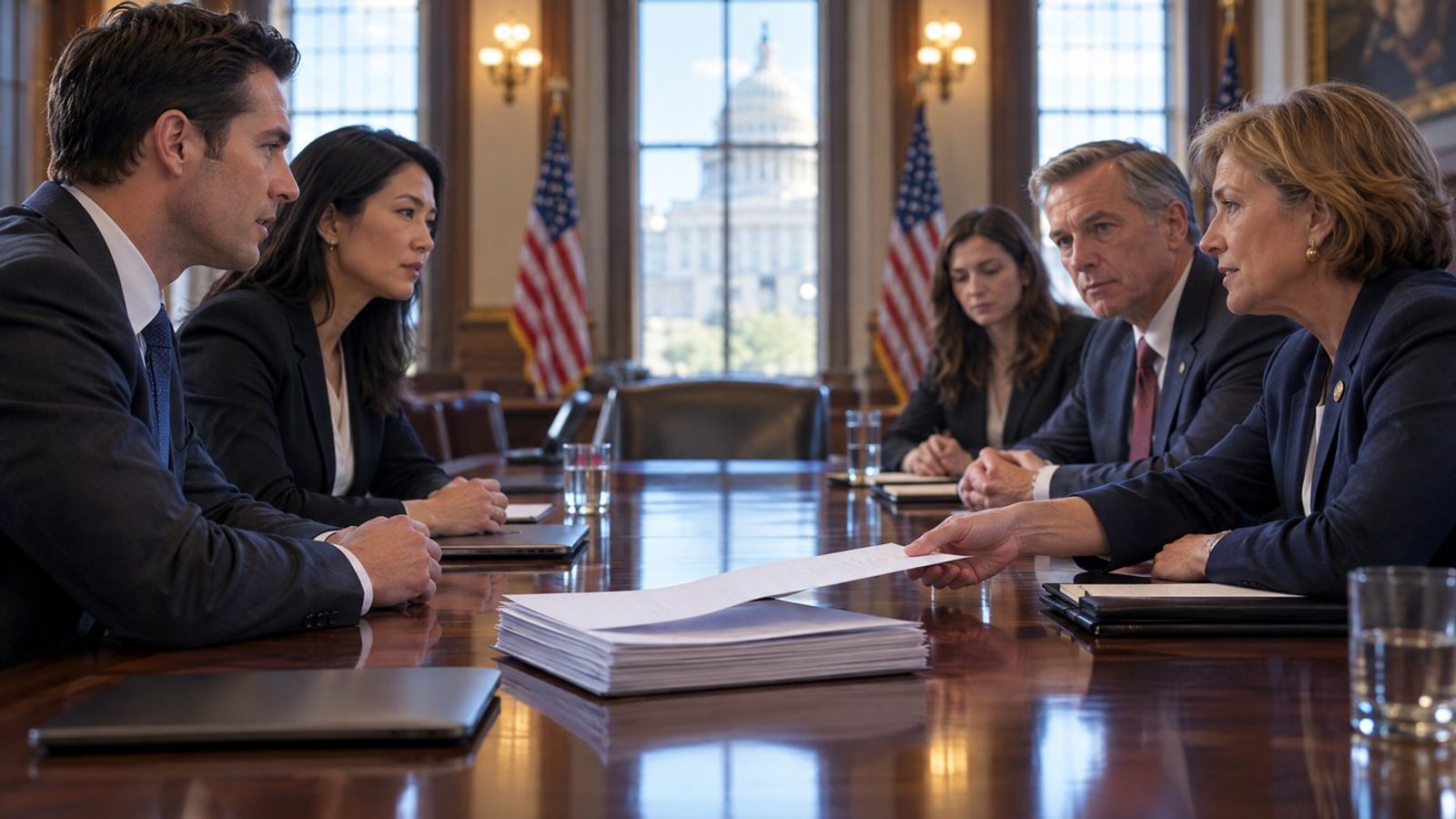
Anthropic has privately proposed a federal AI safety bill that would limit government intervention to cases where models pose over $1 billion in damage or threaten 50+ lives. The bill aims to balance safety and innovation, requiring independent evaluations and setting clear thresholds for action.
TL;DR
- Anthropic proposes a federal AI safety bill with strict intervention thresholds.
- The bill requires independent evaluations and limits government and state authority over AI models.
- This move comes amid broader legislative efforts to regulate advanced AI systems.
What happened
Anthropic, the company behind the Claude AI chatbot, has privately pitched a federal AI safety bill to lawmakers. The bill would restrict government intervention to cases where AI models pose a foreseeable and imminent risk of causing over $1 billion in damages or killing or seriously injuring more than 50 people. The proposed thresholds apply to three categories of threats: biological weapons, cyberattacks, and AI systems escaping control. According to Politico, the legislative effort was first reported on October 16, 2026, citing three people familiar with the discussions.
Under the draft, outside evaluators registered with the Commerce Department would assess AI developers and their frontier models for potential threats. Companies could pay these evaluators, provided their compensation was independent of the findings. If an imminent threat is identified, evaluators would have 72 hours to report it to the Commerce Department, which could then seek a court order to suspend the model. A judge in the U.S. District Court for the District of Columbia would decide whether the identified risk justifies intervention.
The draft also includes provisions that would override certain state AI safety laws, potentially limiting states' ability to impose separate testing, disclosure, and safety requirements on developers. This federal preemption would concentrate authority within the Commerce Department, with federal judges responsible for deciding on suspensions.
Why it matters
This bill represents Anthropic's effort to establish a framework that balances safety and innovation. By setting clear thresholds for government intervention, the company aims to allow developers to test and deploy advanced AI models while ensuring that potential threats are addressed. This approach could influence the broader debate on AI regulation, particularly in balancing the need for safety with the pace of technological advancement.
For developers and startups, the bill's provisions could provide a clearer regulatory landscape, reducing uncertainty around the deployment of advanced AI models. However, the proposed limits on federal and state authority could also spark debate among lawmakers and regulators about the appropriate level of oversight for AI systems. The bill's success will depend on gaining congressional support and navigating the complex political landscape of AI regulation.
Key facts
- Anthropic proposed a federal AI safety bill with strict intervention thresholds.
- Government intervention would be limited to cases posing over $1 billion in damage or 50+ injuries.
- The bill requires independent evaluations by evaluators registered with the Commerce Department.
- Evaluators have 72 hours to report imminent threats to the Commerce Department.
- Federal judges would decide whether to suspend models based on identified risks.
- The draft includes provisions to override certain state AI safety laws.
- Anthropic has previously supported state-level AI safety legislation, including California's frontier AI transparency requirements.
- The bill is part of broader legislative efforts to govern rapidly advancing AI technology.
Context
Anthropic's effort comes as lawmakers pursue other proposals to govern AI. On September 29, 2026, Democratic Sens. Mark Warner, Brian Schatz, and Andy Kim introduced the Artificial Intelligence Risk Management and Security Act of 2026. This measure would establish a federal AI Safety Board and create enforceable safety and security requirements for advanced models. The Senate proposal would require developers to conduct pre-release safety testing, maintain cybersecurity safeguards, and report significant incidents.
Anthropic is also expanding independent scrutiny of its technology. On October 15, 2026, the company granted six researchers from the nonprofit Model Evaluation and Threat Research (METR) access to internal systems, company hardware, and office space. This arrangement allows researchers to examine safety practices and assess risks associated with advanced AI models. METR can publish its findings independently, although Anthropic retains limited rights to require redactions involving sensitive information.