Three leading AI model families—DeepSeek, Mistral, and Qwen—are now competing for developer attention with their latest open-source releases, each boasting unique strengths and targeting different market needs. The race is on to see which model will gain traction among developers and enterprises.
TL;DR
- DeepSeek, Mistral, and Qwen have each released new open-source AI models, aiming to capture developer attention.
- DeepSeek's V4.1-Flash-1017 focuses on speed and cost-efficiency, while Mistral's Large 4 promises open weights and sovereignty.
- Qwen offers a wide range of models but lacks clear official documentation, making it harder to evaluate.
What happened
DeepSeek updated its V4.1-Flash model to V4.1-Flash-1017 on October 17, claiming improvements in reasoning, coding, and visual benchmarks. The model is currently the only active tier in DeepSeek's lineup, as the promised V4.1-Pro has not yet been released.
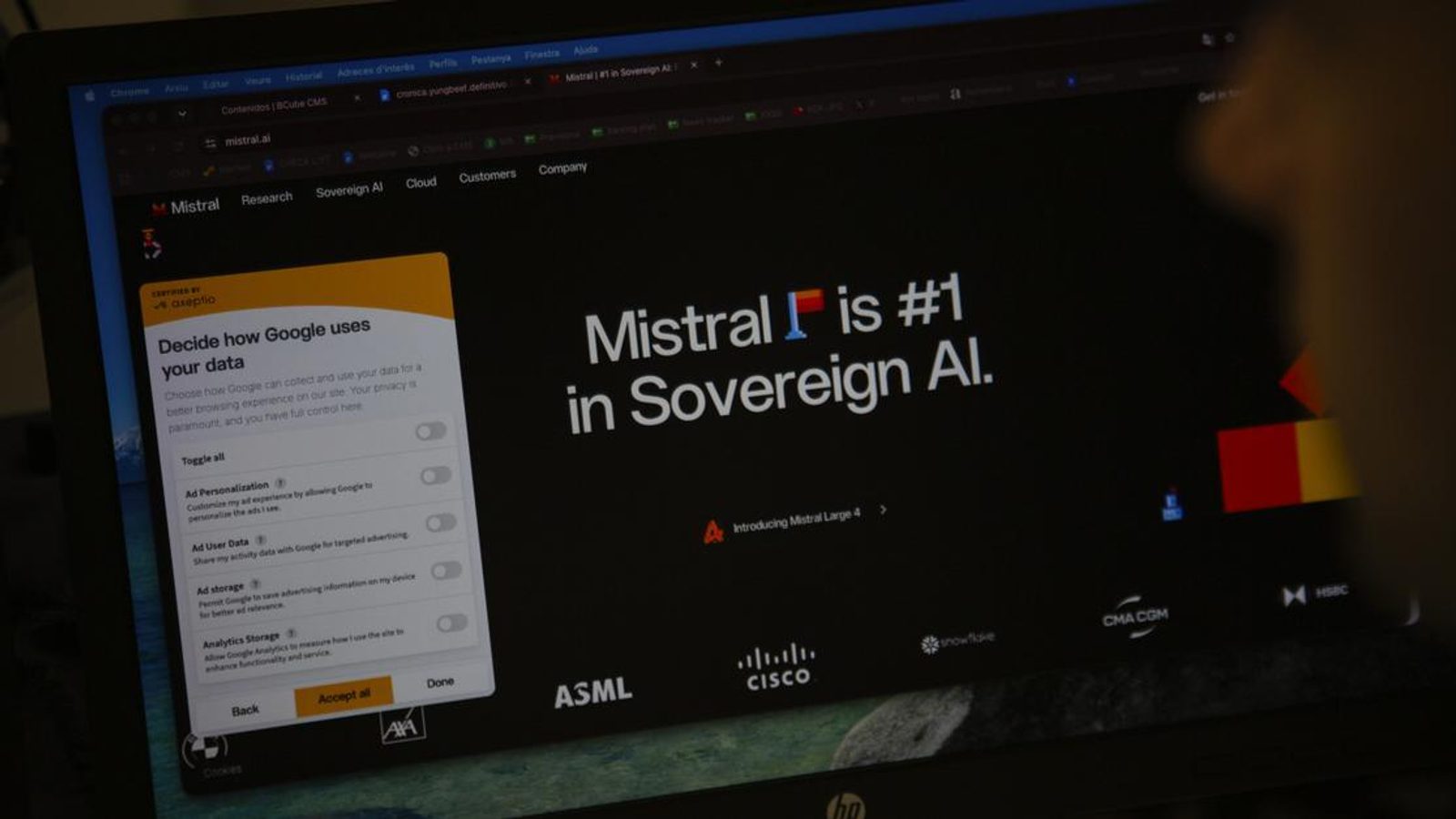
Mistral launched Large 4, also known as Le Chonk, on October 6 as a public preview API, with the promise of downloadable weights by the end of October. The model is described as a hybrid instruct-and-reasoning mixture-of-experts architecture with about 1 trillion total parameters.
Qwen released Qwen3.8 in August, with various tiers including Qwen3.8-Max, Qwen3.8-27B, and Qwen3.8-Flash-Next. However, official documentation for these models is scarce, making it difficult to verify their specifications and capabilities.
Why it matters
For developers and startups, the choice between these models depends on specific needs: DeepSeek offers cost-efficiency, Mistral promises sovereignty with open weights, and Qwen provides a wide range of options but with less clarity.
Investors should watch this competition closely, as the success of these models could influence the market share and valuation of their respective companies. The open-source nature of these models also lowers the barrier to entry for new competitors.
The lack of clear documentation and verification for some models, particularly Qwen, highlights the importance of due diligence when evaluating AI solutions. Developers must rely on third-party reports and benchmarks, which may not always be accurate.
Key facts
- DeepSeek V4.1-Flash-1017 was updated on October 17, 2026, with improvements in reasoning, coding, and visual benchmarks.
- Mistral Large 4 was launched as a public preview API on October 6, 2026, with downloadable weights promised by the end of October.
- Qwen3.8 and its various tiers were released in August 2026, but official documentation is lacking.
- DeepSeek's model is currently the only active tier in its lineup, with the V4.1-Pro not yet released.
- Mistral's Large 4 model has about 1 trillion total parameters, with 49 billion active parameters.
- Qwen's official pages do not provide clear information on the specifications and capabilities of its latest models.
- DeepSeek's V4 Preview was open-sourced on April 24, 2026, but the license and weights for V4.1-Flash are not confirmed.
- Mistral trained Large 4 using 3,800 NVIDIA Grace Blackwell GPUs in European data centers.
Context
The competition among DeepSeek, Mistral, and Qwen reflects the broader trend of open-source AI models gaining traction in the market. These models offer developers and enterprises the flexibility to customize and deploy AI solutions without being locked into proprietary systems.
The open-source nature of these models also fosters innovation and collaboration within the AI community. Developers can contribute to the improvement of these models, and enterprises can leverage them to build custom AI applications tailored to their specific needs.
However, the lack of clear documentation and verification for some models highlights the challenges of navigating the rapidly evolving AI landscape. Developers and enterprises must exercise caution and conduct thorough evaluations before adopting any AI solution.