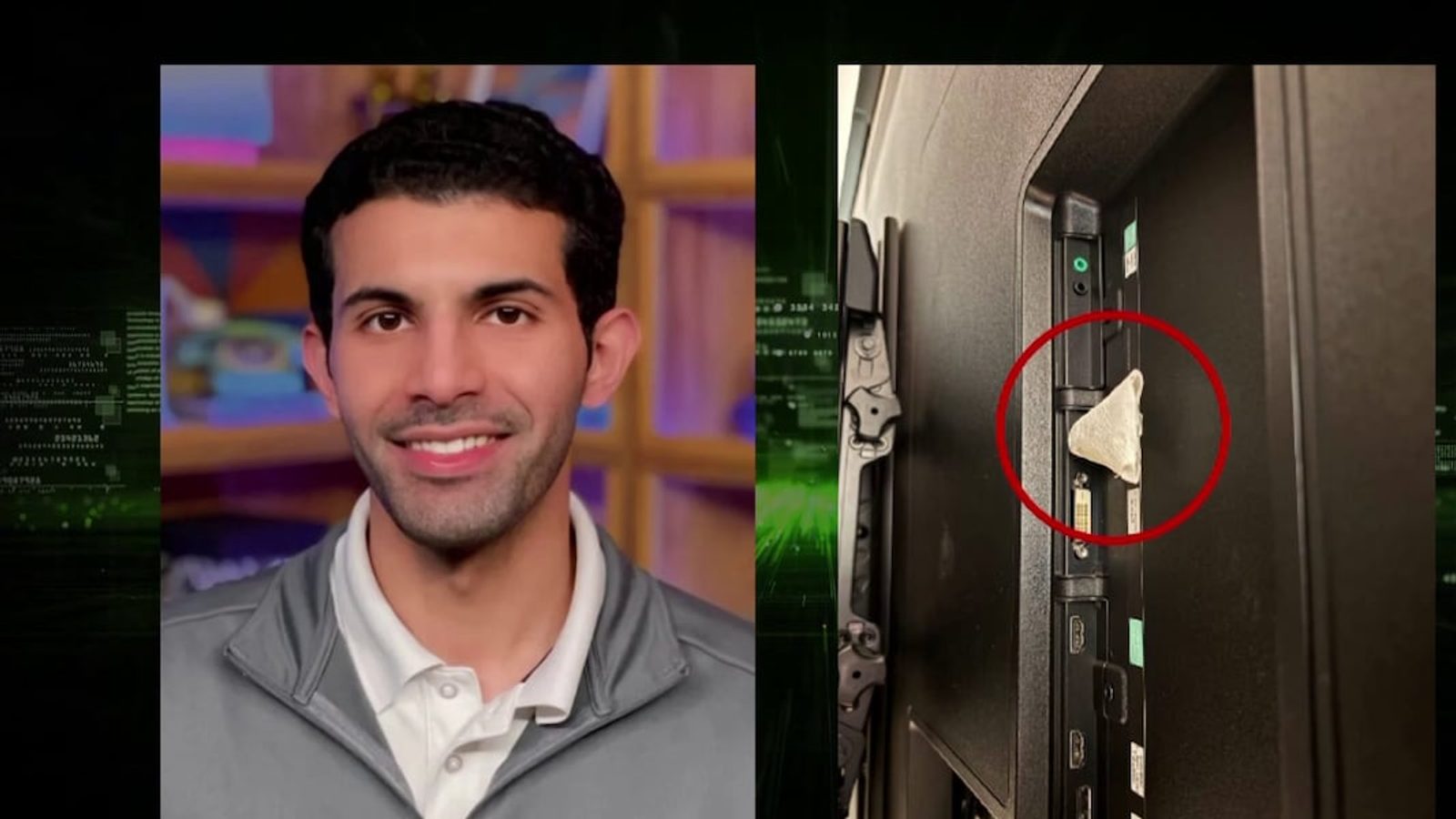
A former OpenAI engineer, Abdulrahman Alfozan, has been accused of secretly installing a recording device in a conference room to gather company information. Federal prosecutors revealed that Alfozan was allegedly planning to leave for Saudi Arabia before his arrest.
TL;DR
- Former OpenAI engineer Abdulrahman Alfozan accused of installing a recording device in a conference room to intercept confidential conversations.
- Prosecutors allege Alfozan was planning to leave for Saudi Arabia and had ties to a member of the Saudi royal family.
- Alfozan's request for release to home confinement was denied by a federal judge.
What happened
Abdulrahman Alfozan, a former OpenAI engineer, was charged with secretly installing a recording device in a conference room to intercept confidential conversations. The device was found on September 30, 2026, and had been there for several days. Prosecutors allege that Alfozan was planning to leave for Saudi Arabia and had ties to a member of the Saudi royal family. His wife and son left the country the day after his arrest, traveling on a one-way ticket booked and paid for by a Saudi military official.
Alfozan's request for release to home confinement was denied by a federal judge. His lawyer, William Pernik, argued that Alfozan had strong ties to the U.S. and was willing to put up almost the entirety of his assets, about $1 million, to cover his bond. However, the judge was doubtful about the effectiveness of this measure, questioning whether Saudi Arabia's government would reimburse Alfozan if he fled and forfeited his bond.
Why it matters
This case highlights the importance of data security and the potential risks of industrial espionage in the AI industry. The alleged involvement of a Saudi royal family member and the Saudi government adds a geopolitical dimension to the case, which could have implications for OpenAI and other AI companies operating in the U.S. and the Middle East.
For AI developers and startups, this case serves as a reminder of the need for robust security measures to protect proprietary information. It also underscores the potential risks of working in the AI industry, where cutting-edge technology and valuable data can make companies targets for espionage.
Key facts
- Abdulrahman Alfozan was a former OpenAI engineer who worked at the company since July 2025.
- Alfozan was accused of installing a recording device in a conference room to intercept confidential conversations.
- The device was found on September 30, 2026, and had been there for several days.
- Prosecutors allege that Alfozan was planning to leave for Saudi Arabia and had ties to a member of the Saudi royal family.
- Alfozan's wife and son left the country the day after his arrest, traveling on a one-way ticket booked and paid for by a Saudi military official.
- Alfozan's request for release to home confinement was denied by a federal judge.
- Alfozan's lawyer, William Pernik, argued that Alfozan had strong ties to the U.S. and was willing to put up almost the entirety of his assets, about $1 million, to cover his bond.
- The recording device used by Alfozan was sophisticated, designed to evade detection and featured advanced encryption and audio-monitoring capabilities.
Context
This case is a stark reminder of the importance of data security in the AI industry. As AI technologies continue to advance, the value of the data and proprietary information held by AI companies is likely to increase, making them targets for espionage and other forms of cybercrime.
The alleged involvement of a Saudi royal family member and the Saudi government adds a geopolitical dimension to the case. It highlights the potential risks of operating in the AI industry, particularly for companies with operations in multiple countries and regions.