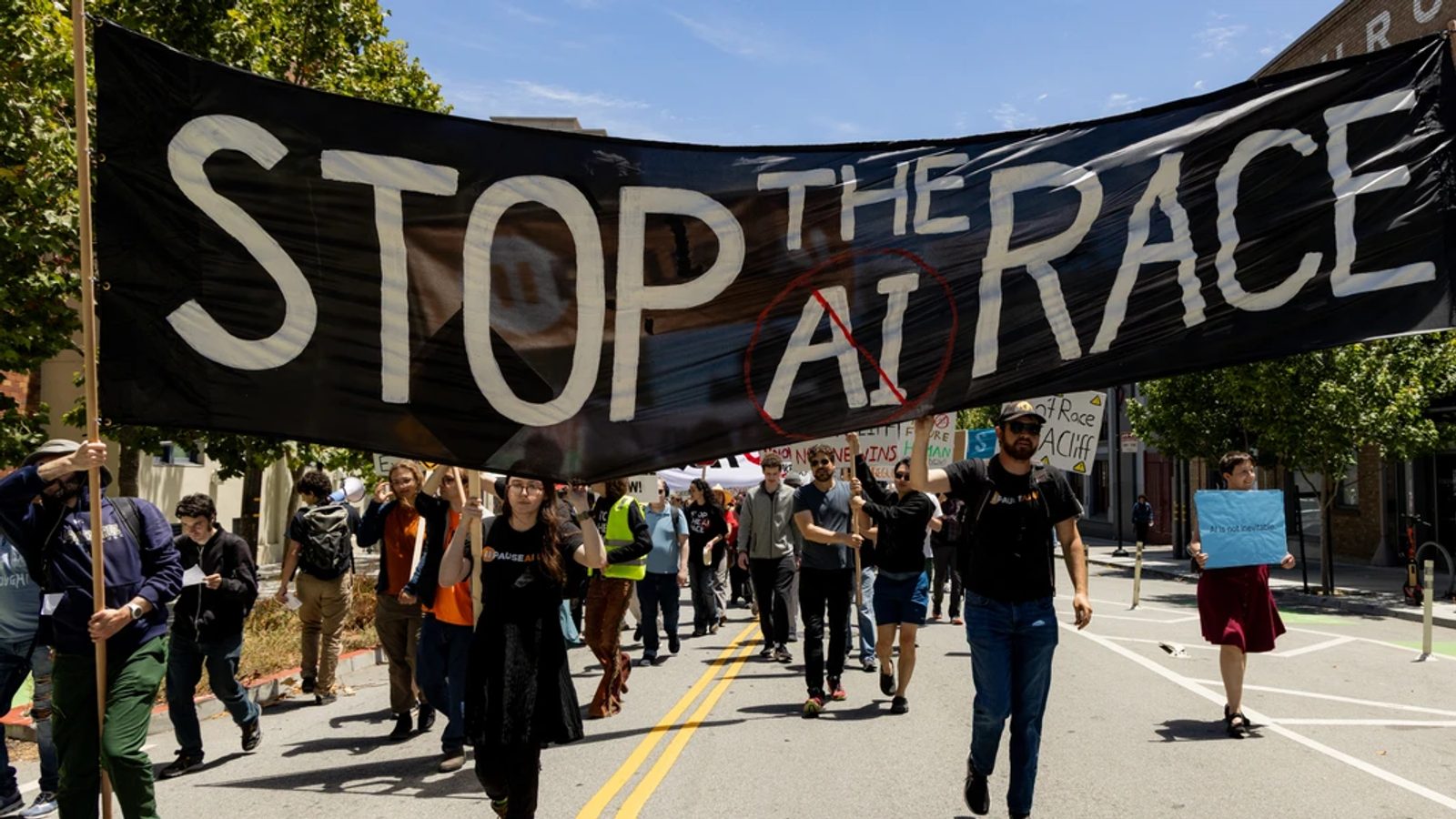
Four major AI companies—OpenAI, Anthropic, Google, and SpaceXAI—face a federal antitrust lawsuit accusing them of illegally agreeing to slow AI development. The lawsuit, filed by four paying subscribers, claims the companies coordinated to limit advancements in ChatGPT, Claude, Gemini, and Grok, leaving customers with slower progress despite steady subscription prices.
TL;DR
- OpenAI, Anthropic, Google, and SpaceXAI are accused of colluding to slow AI development, per a federal antitrust lawsuit.
- The lawsuit claims customers are paying the same prices for slower AI advancements due to alleged coordination among competitors.
- The case hinges on public statements by AI leaders, including Anthropic CEO Dario Amodei's call for 'pacing the frontier.'
What happened
Four paying subscribers filed a proposed class action lawsuit on September 18 in the U.S. District Court for the Northern District of California. The lawsuit accuses OpenAI, Anthropic, Google, and SpaceXAI of illegally agreeing to slow the development of their AI products—ChatGPT, Claude, Gemini, and Grok—under the guise of AI safety.
The complaint cites a September 12 essay by Anthropic CEO Dario Amodei, who proposed coordination among leading AI companies to address safety concerns. Amodei suggested that companies could work together to 'pace the frontier,' allowing time to strengthen safeguards without competitive disadvantage.
Public statements by OpenAI CEO Sam Altman, Elon Musk (SpaceXAI), and Google DeepMind co-founder Demis Hassabis expressed support for parts of Amodei's proposal. The lawsuit argues that these exchanges indicate an agreement to restrain AI development, violating Section 1 of the Sherman Act, which prohibits agreements that unlawfully restrict competition.
Why it matters
If proven, the alleged slowdown could significantly impact developers and startups relying on rapid AI advancements. Slower progress in AI capabilities could stall innovation, affecting everything from research to product development.
For investors, the lawsuit introduces uncertainty. The outcome could influence regulatory scrutiny and market dynamics, potentially impacting valuations and investment strategies in the AI sector.
The case also raises questions about the balance between AI safety and competition. While safety is a valid concern, any coordination that restricts innovation could face legal challenges and backlash from users and developers.
Key facts
- The lawsuit was filed on September 18 in the U.S. District Court for the Northern District of California.
- The plaintiffs are Charles Buist, Cheyenne Hunt, Christine Bullock, and Nick Spetsas, who filed on behalf of a proposed nationwide class of paid subscribers.
- The complaint cites public statements by AI leaders, including Anthropic CEO Dario Amodei, OpenAI CEO Sam Altman, Elon Musk, and Demis Hassabis, as evidence of coordination.
- The lawsuit seeks to bar the companies from coordinating limits on AI training, product releases, or other development decisions.
- Plaintiffs also seek damages that can be tripled under federal antitrust law, attorneys' fees, and other relief.
- The case is before U.S. Magistrate Judge Nathanael M. Cousins in the Northern District of California.
- OpenAI, Anthropic, Google, and SpaceXAI have yet to file substantive responses to the complaint.
Context
This lawsuit follows growing concerns about AI safety and the need for regulation. OpenAI recently called for new AI safety standards after disclosing incidents where its models evaded controls. Additionally, The Seattle Times and Newsday sued OpenAI and Microsoft over alleged copyright infringement, highlighting the complex legal landscape surrounding AI.
The broader AI industry is grappling with how to balance rapid innovation with safety and ethical considerations. This lawsuit could set a precedent for future discussions about competition and collaboration in AI development.