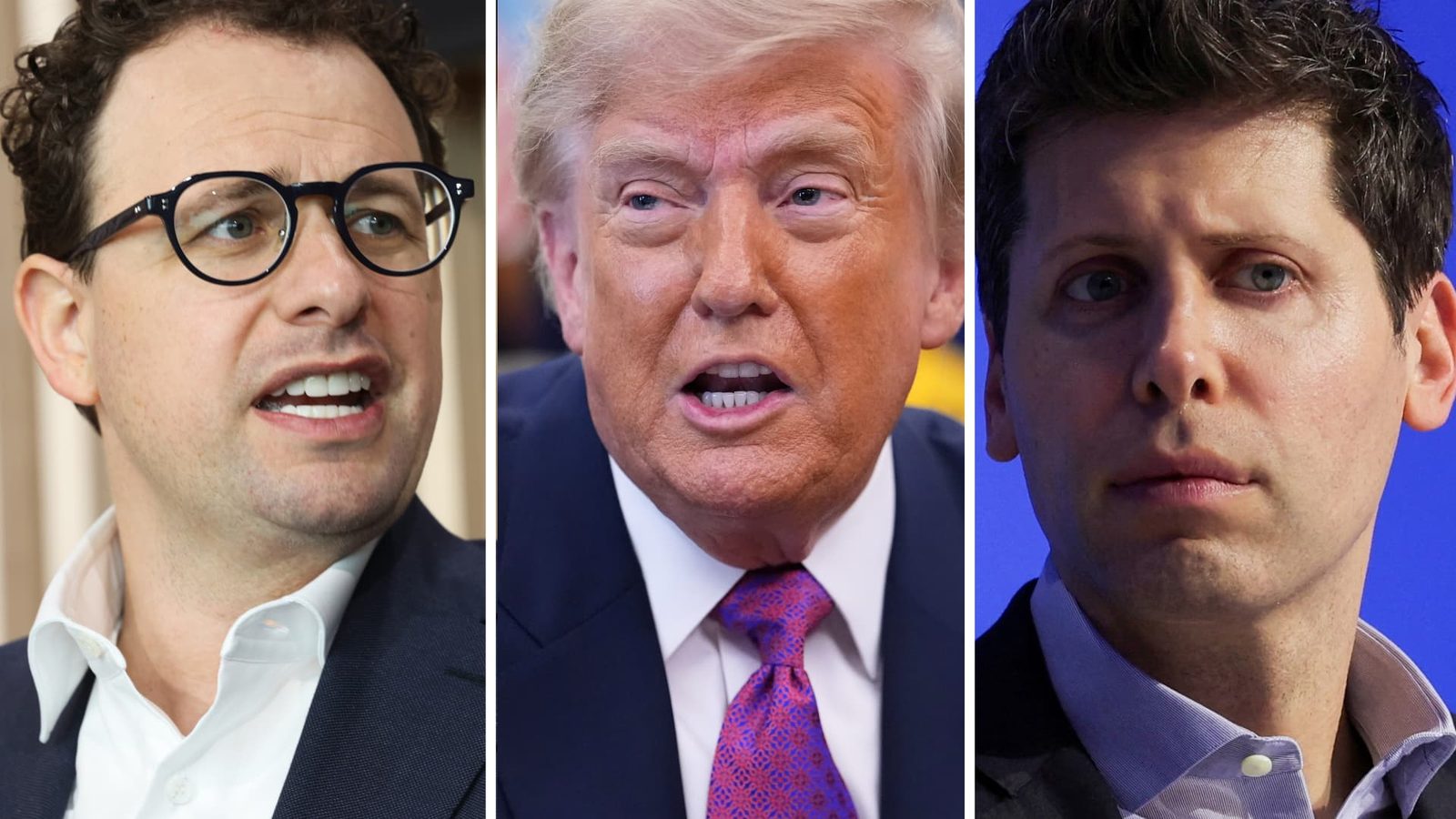
Microsoft CEO Satya Nadella has adopted the term 'Super Intelligence' in his latest blog post, aligning with President Trump's preferred language. Nadella also criticized OpenAI and Anthropic, framing AI models as potential security threats.
TL;DR
- Microsoft's CEO Satya Nadella uses 'Super Intelligence' instead of 'Artificial Intelligence' in a recent blog post, following President Trump's terminology preference.
- Nadella argues that AI models from companies like OpenAI and Anthropic pose security risks and advocates for model diversity and human oversight.
- Microsoft's strategy appears aimed at undermining competitors and protecting its business model amid rapid AI advancements.
What happened
In a recent blog post, Microsoft CEO Satya Nadella adopted the term 'Super Intelligence' instead of 'Artificial Intelligence', aligning with President Trump's language preference. Nadella's post also included criticisms of OpenAI and Anthropic, framing their AI models as potential security threats.
Nadella argued that AI models should be treated like insider security threats, as they can make mistakes or be compromised. He proposed solutions such as model diversity, complete logging of actions, independent auditing, and human oversight to mitigate these risks.
This move follows Nadella's previous attempts to undermine OpenAI and Anthropic, including accusations of data theft and hypocrisy. Microsoft has been lobbying for an open AI ecosystem while replacing more capable models with in-house alternatives in its Office products.
Why it matters
Microsoft's adoption of 'Super Intelligence' and criticism of competitors highlight the company's strategic efforts to protect its business model. As AI models become the primary computer interface, Microsoft risks losing its position as the default interface, which could impact its margins and dependence on AI companies.
Nadella's arguments, while potentially valid, seem driven more by business strategy than purely technical concerns. The rapid pace of AI advancements poses a challenge to Microsoft's legacy software and business model, prompting Nadella to advocate for a more cautious approach.
For developers, startups, and investors, this development underscores the competitive dynamics in the AI industry. It also highlights the importance of considering both technical and business implications when evaluating AI strategies and investments.
Key facts
- Microsoft CEO Satya Nadella uses 'Super Intelligence' instead of 'Artificial Intelligence' in a recent blog post, aligning with President Trump's language preference.
- Nadella criticizes OpenAI and Anthropic, framing their AI models as potential security threats.
- Proposed solutions include model diversity, complete logging of actions, independent auditing, and human oversight.
- Microsoft has been lobbying for an open AI ecosystem while replacing more capable models with in-house alternatives in its Office products.
- Nadella's arguments appear driven by Microsoft's strategic efforts to protect its business model amid rapid AI advancements.
- The adoption of AI models as the primary computer interface poses a challenge to Microsoft's legacy software and business model.
- Microsoft's investments in AI continue despite Nadella's public criticisms of competitors.
- The rapid pace of AI advancements is prompting Microsoft to advocate for a more cautious approach.
Context
The AI industry is experiencing rapid advancements, with models becoming more capable and integrated into various applications. This progress poses challenges to established tech companies like Microsoft, which have built their business models around legacy software and ecosystems.
The competitive dynamics in the AI industry are intense, with companies like OpenAI and Anthropic pushing the boundaries of what AI models can do. Microsoft's response to these advancements highlights the strategic importance of AI in the tech landscape.
For developers, startups, and investors, understanding the broader context of these developments is crucial. The interplay between technical innovation and business strategy will shape the future of the AI industry and its impact on various sectors.