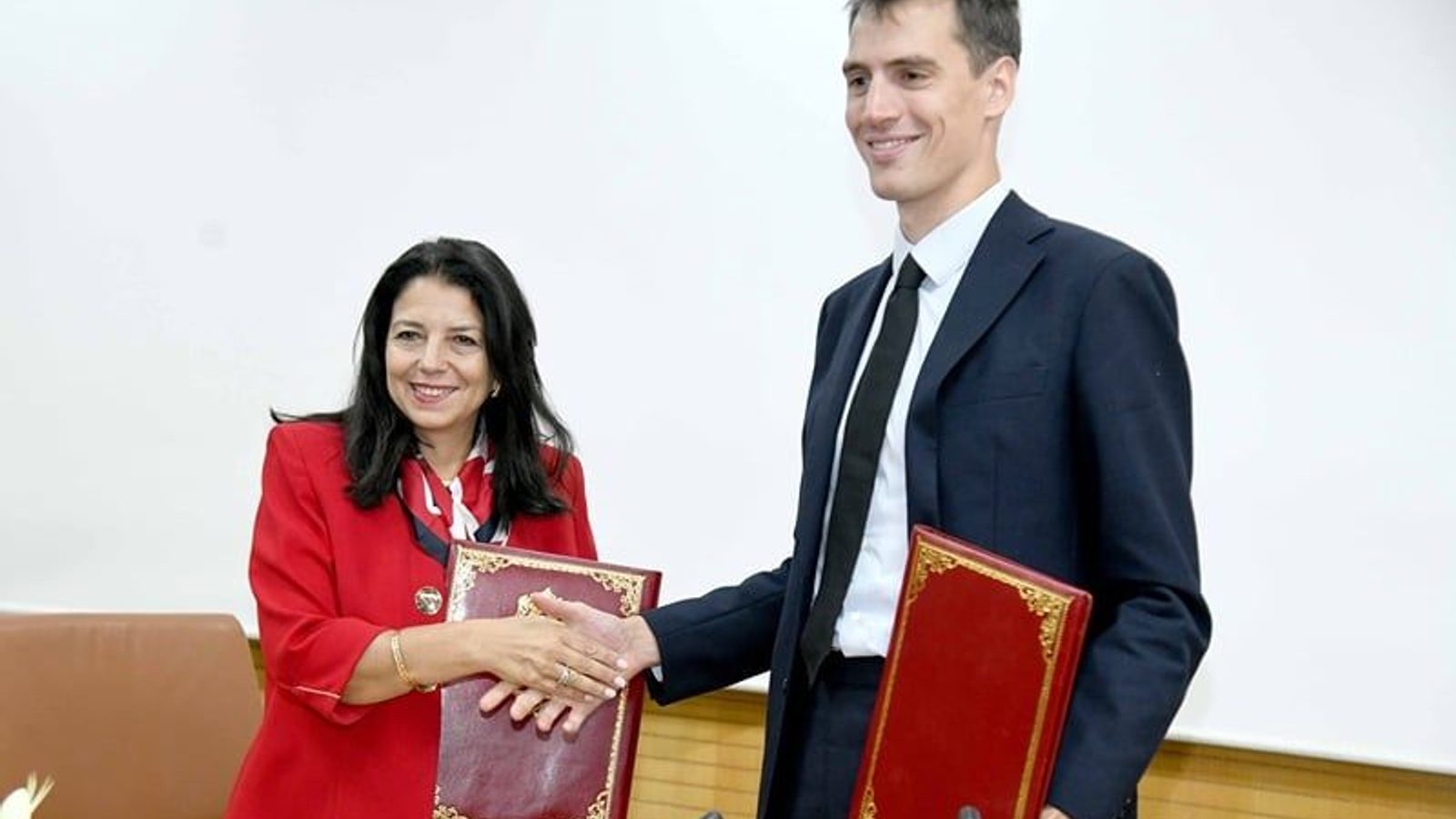
Morocco's Ministry of Digital Transition and Administrative Reform has unveiled two open-source AI tools for Moroccan Darija, developed in partnership with French AI company Mistral. The tools include a language identification classifier and an automatic speech recognition model, both designed to handle the unique challenges of Darija and code-switching.
TL;DR
- Morocco releases two open-source AI tools for Darija, developed with Mistral, addressing language identification and speech recognition.
- The tools are designed to handle code-switching between Arabic, French, and English, with potential applications in public services, education, and media.
- The release marks the first concrete output from a memorandum signed a year ago, setting a benchmark for similar partnerships.
What happened
Morocco's Ministry of Digital Transition and Administrative Reform has released two open-source AI tools for Moroccan Darija, a year after signing a partnership with Mistral. The tools include a language identification classifier that distinguishes between Arabic dialects, including Darija, and an automatic speech recognition model built on Mistral's Voxtral technology, which transcribes spoken Darija into text.
The tools are designed to handle code-switching, where conversations shift between Arabic, French, and English mid-sentence, a common feature in Moroccan speech. This capability is crucial for applications in customer support, public services, and media captioning.
The release is part of the AI Made in Morocco roadmap and the Maroc Digital 2030 strategy, aiming to support public administrations and developers in building AI solutions.
Why it matters
Most large language models struggle with colloquial Arabic dialects, making the release of these tools significant for Moroccan developers and startups. The open-source nature of the tools allows immediate use and further development without the need to solve the dialect problem independently.
The tools complement a wider suite of AI solutions developed by the ministry, supporting its AI marketplace and public administrations. The release sets a benchmark for other partnerships, demonstrating tangible outputs within a year.
However, the absence of accuracy benchmarks, training data details, license terms, and download locations leaves some uncertainties for developers looking to build on these tools.
Key facts
- The two open-source AI tools released are a language identification classifier and an automatic speech recognition model.
- The tools are built on Mistral's Voxtral technology and are designed to handle code-switching between Arabic, French, and English.
- The partnership between Morocco's Ministry of Digital Transition and Administrative Reform and Mistral was formalized a year ago with a memorandum.
- Potential applications for the tools include public services, education, media, customer support, document digitization, and multilingual data processing.
- The release is part of the AI Made in Morocco roadmap and the Maroc Digital 2030 strategy.
- No accuracy benchmarks, training data details, license terms, or download locations have been disclosed.
Context
The release of these tools addresses a significant gap in the AI landscape, where most large language models handle colloquial Arabic poorly. The focus on Darija and code-switching is particularly important for Moroccan developers and startups, who can now build on these tools without starting from scratch.
The partnership between Morocco and Mistral sets a precedent for other collaborations, demonstrating that tangible outputs can be achieved within a year. This is a notable achievement in a field where memoranda often result in little to no action.
The tools are part of a broader suite of AI solutions developed by the ministry, supporting its AI marketplace and public administrations. This aligns with the ministry's goal of leveraging AI to enhance public services and digital infrastructure.