OpenAI and Chile's government have signed a memorandum of understanding to train civil servants in AI, with 78% of initiatives in Chile's National AI Policy already underway or complete. The partnership will also explore AI tools for public services and support for local startups.
TL;DR
- OpenAI and Chile's government will train civil servants in AI, with 78% of initiatives in Chile's National AI Policy already underway or complete.
- The partnership will explore AI tools for public services and support for local startups, with a joint task force shaping the first projects.
- The agreement is part of OpenAI's wider work in Latin America, aiming to set an example for other countries in the region.
What happened
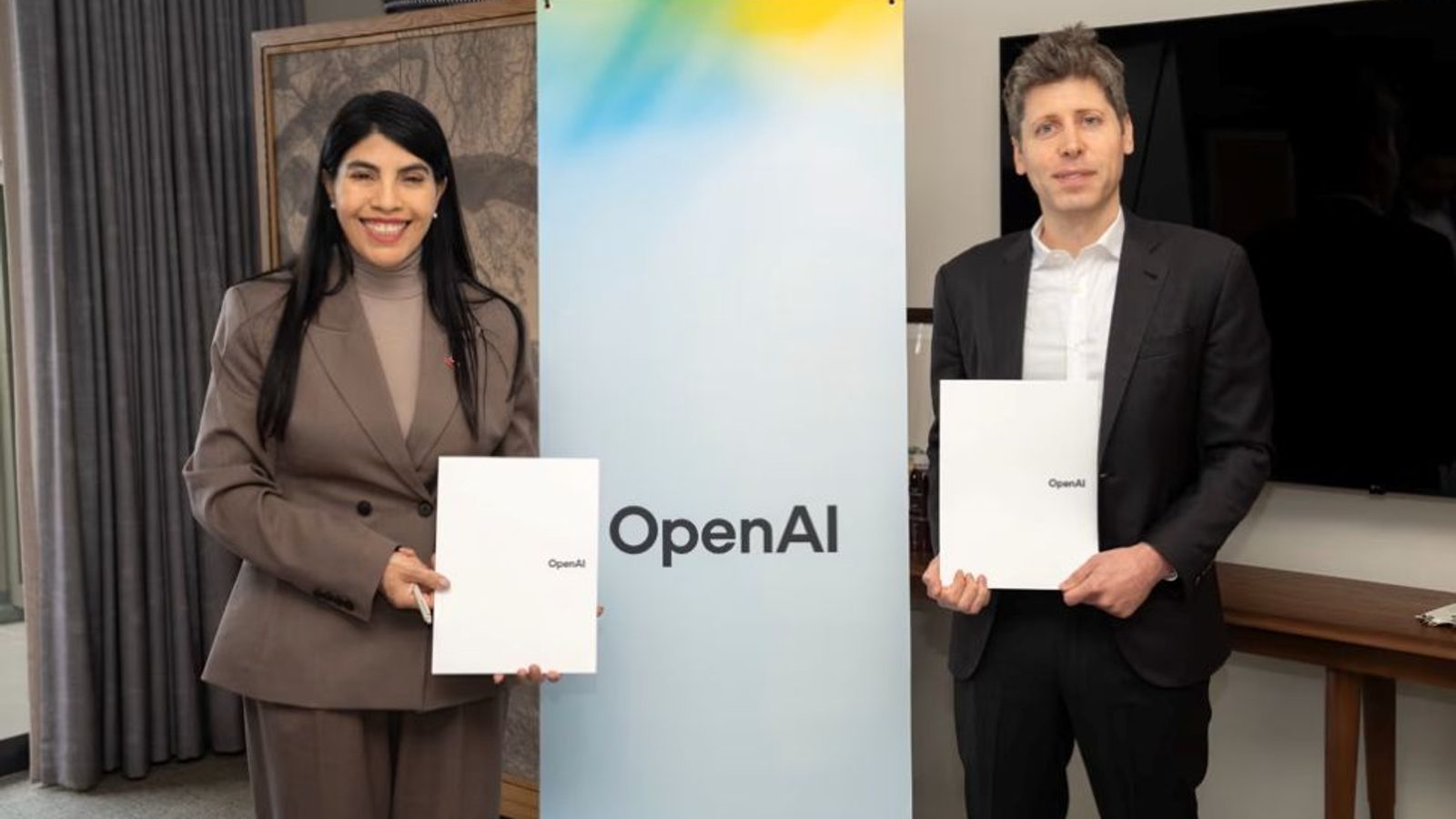
Chile's government and OpenAI have signed a memorandum of understanding to explore AI training for civil servants and potential uses of AI in ministry administration. The agreement was signed by OpenAI CEO Sam Altman and Ximena Lincolao, Chile's Minister of Science, Technology, Knowledge and Innovation, on the sidelines of Semafor's Silicon Valley & The World conference in California. OpenAI announced the partnership on November 17 as part of OpenAI for Countries, which is supported by the U.S. Department of Commerce's technology export program.
The partners are considering workshops tailored to different government roles, covering topics such as using AI tools effectively, checking AI outputs, and handling sensitive information. The training would also cover when staff need to review an output or make a decision themselves. One option is to train government staff who could then teach colleagues. A separate part of the agreement would examine where AI might be used in the science ministry's own administrative processes, with OpenAI potentially advising staff on adopting new models and training them to use the tools.
Why it matters
This partnership could significantly enhance the efficiency and capabilities of Chile's public services by integrating AI tools into daily operations. For civil servants, this means gaining valuable skills in AI, which could improve their decision-making processes and overall productivity. For startups, the agreement opens doors to access OpenAI programs and technology, alongside practical training, technical guidance, and mentoring.
The agreement is part of OpenAI's wider work in Latin America, aiming to set an example for other countries in the region. This could lead to broader adoption of AI in public services across Latin America, fostering regional collaboration and innovation. However, the memorandum makes no investment or purchasing commitment, and the specific activities, eligibility, resources, and technology access will be agreed upon separately, with privacy and information security safeguards applying to any work that proceeds.
Key facts
- OpenAI and Chile's government have signed a memorandum of understanding to explore AI training for civil servants.
- The agreement was signed by OpenAI CEO Sam Altman and Ximena Lincolao, Chile's Minister of Science, Technology, Knowledge and Innovation.
- The partnership is part of OpenAI for Countries, supported by the U.S. Department of Commerce's technology export program.
- Proposed topics for workshops include using AI tools effectively, checking AI outputs, and handling sensitive information.
- The training would also cover when staff need to review an output or make a decision themselves.
- A separate part of the agreement would examine where AI might be used in the science ministry's own administrative processes.
- The startup strand would explore access to OpenAI programs and technology, alongside practical training, technical guidance, and mentoring.
- A joint task force is expected to draw up the first work plan, choosing priorities, assigning a lead for each activity, and setting milestones and measures of success.
Context
This agreement builds on Chile's National AI Policy, which already includes AI and ethics training for public officials. The action plan brings together 177 initiatives coordinated by 14 ministries. In April 2025, the science ministry reported that 78% were underway or complete. The national plan also covers education and research, listing resources for teachers and students, courses on AI in teaching, and work to make open data available for AI projects.
The partnership is part of OpenAI's wider work in Latin America, aiming to set an example for other countries in the region. This could lead to broader adoption of AI in public services across Latin America, fostering regional collaboration and innovation. However, the memorandum makes no investment or purchasing commitment, and the specific activities, eligibility, resources, and technology access will be agreed upon separately, with privacy and information security safeguards applying to any work that proceeds.