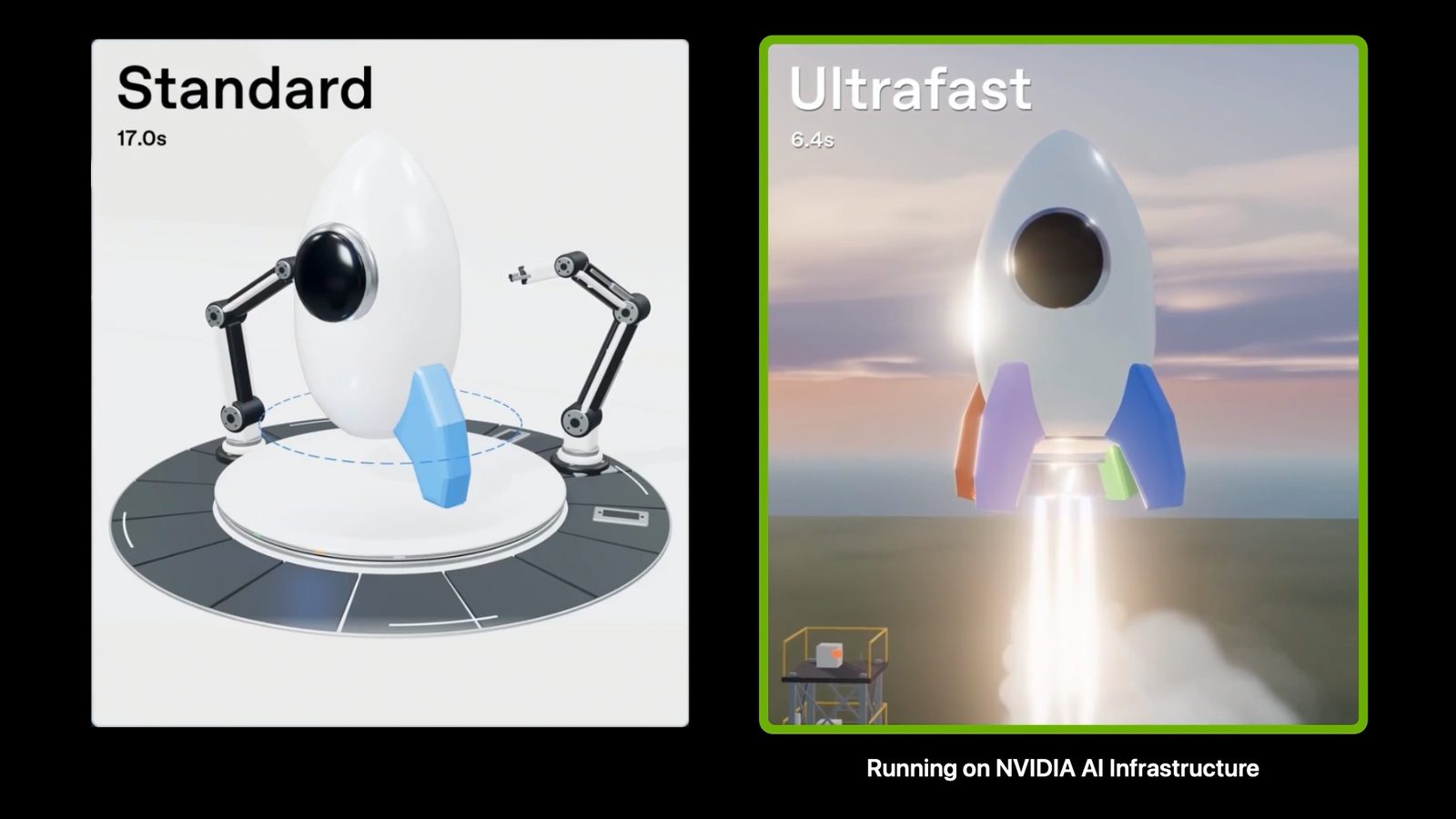
OpenAI's executives have optimized GPT-6 Astra Ultrafast's inference for Nvidia's Blackwell GPUs using their own models. This move aims to enhance performance and efficiency on Nvidia's latest hardware.
TL;DR
- OpenAI optimized GPT-6 Astra Ultrafast's inference for Nvidia's Blackwell GPUs.
- This optimization leverages OpenAI's own models to improve performance.
- The move highlights the growing collaboration between AI developers and hardware manufacturers.
What happened
OpenAI executives have announced that they used the company's own models to optimize the inference of GPT-6 Astra Ultrafast on Nvidia's Blackwell GPUs. This optimization is designed to enhance the model's performance and efficiency on Nvidia's latest hardware.
The optimization process involved fine-tuning the model to take full advantage of the Blackwell GPUs' capabilities. According to OpenAI, this approach ensures that GPT-6 Astra Ultrafast can deliver faster and more efficient inference times.
Why it matters
This optimization is significant for developers and startups working with large language models, as it demonstrates how AI models can be tailored to specific hardware to achieve better performance. For investors, this move underscores the importance of collaboration between AI developers and hardware manufacturers.
The competitive angle here is that OpenAI is leveraging its own models to optimize performance on Nvidia's hardware, which could set a new standard for AI model optimization. However, the real impact will depend on how widely adopted this optimization becomes and its effectiveness in real-world applications.
Key facts
- OpenAI's executives optimized GPT-6 Astra Ultrafast's inference for Nvidia's Blackwell GPUs.
- The optimization uses OpenAI's own models to improve performance.
- Nvidia's Blackwell GPUs are the latest hardware targeted for this optimization.
- The goal is to enhance the model's performance and efficiency.
- This move highlights the growing collaboration between AI developers and hardware manufacturers.
- The optimization process involved fine-tuning the model for specific hardware capabilities.
- OpenAI aims to deliver faster and more efficient inference times with this optimization.
- The real impact will depend on the adoption and effectiveness of this optimization in real-world applications.
Context
In the broader AI landscape, this optimization is part of a trend where AI developers are increasingly collaborating with hardware manufacturers to enhance model performance. This collaboration is crucial as AI models become more complex and resource-intensive.
Nvidia, a leading provider of GPUs for AI applications, has been at the forefront of developing hardware that supports advanced AI models. OpenAI's move to optimize its models for Nvidia's Blackwell GPUs is a testament to this ongoing partnership.
For developers and startups, this optimization could serve as a blueprint for how to tailor AI models to specific hardware to achieve better performance. For investors, it underscores the importance of collaboration between AI developers and hardware manufacturers in driving innovation.