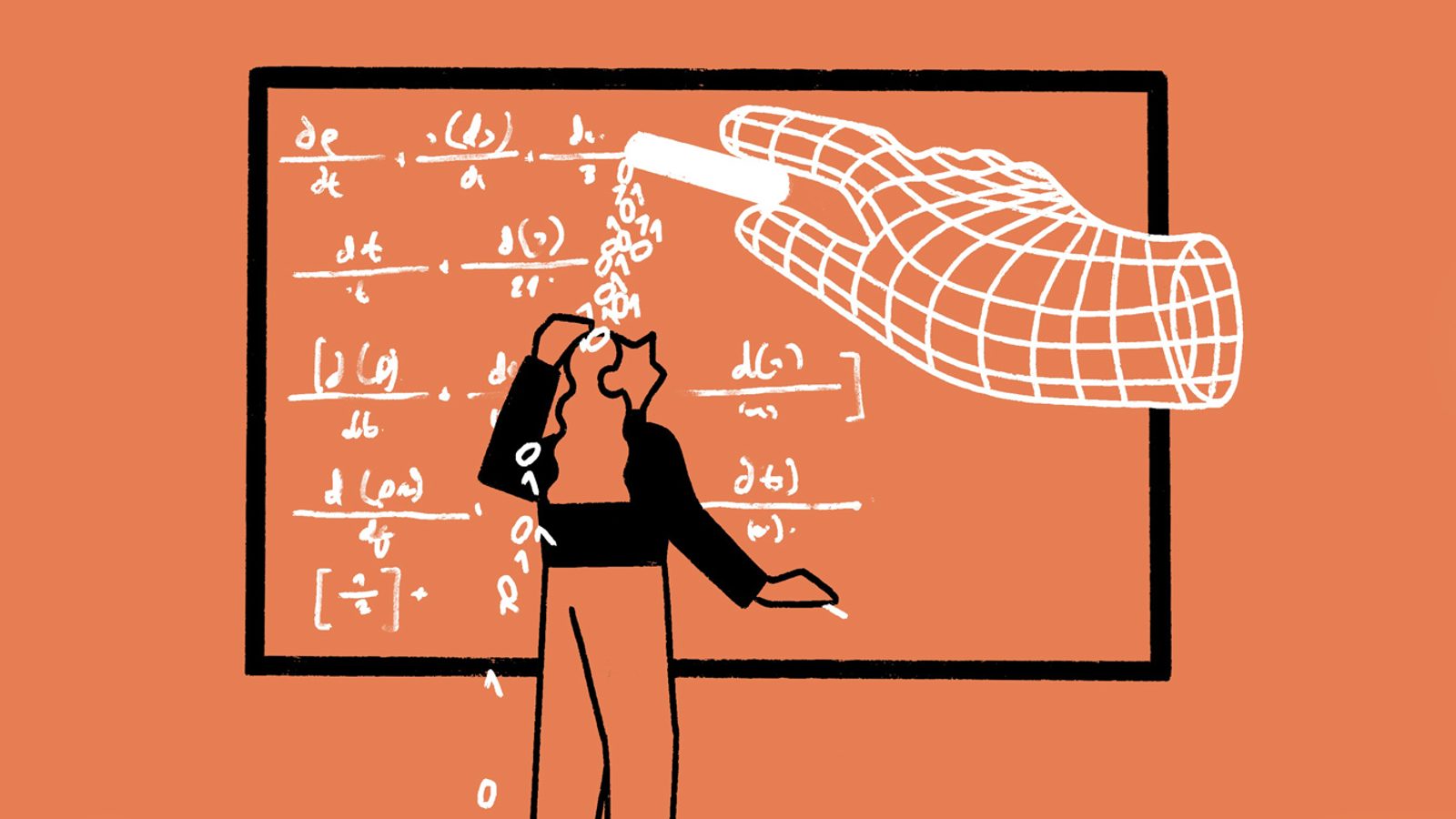
OpenAI's 166-page solution to the Navier-Stokes problem is facing scrutiny from mathematicians, who question its validity and the company's understanding of its own proof. Experts argue that the proof diverges significantly from the approach it claims to follow.
TL;DR
- OpenAI's 166-page Navier-Stokes proof is disputed by mathematicians, who argue it diverges from the claimed approach.
- The proof, written in Lean, is difficult for humans to read and understand.
- OpenAI deployed 10,000 model instances for 88 hours, but the contribution of this scale is unclear.
What happened
In early September, OpenAI presented a 166-page potential solution to the Navier-Stokes problem, claiming it followed the approach of Spanish mathematicians Diego Córdoba and Luis Martínez-Zoroa. However, several groups of experts disagree, according to Scientific American. Mathematician Gonzalo Cao-Labora of EPFL stated that the similarities are only surface-level, and the proof takes a different approach when examined in detail.
The potential proof is written in Lean, a formal verification language that checks every logical step but is not easily readable by humans. The Clay Mathematics Institute (CMI) has been reviewing it since its release. In early October, OpenAI released roughly 400 more results on GitHub, which the math community has struggled to keep up with. This approach angered many mathematicians, who felt it cheapened their field.
Why it matters
This controversy highlights the challenges of using AI to solve complex mathematical problems. The dispute raises questions about the validity and understanding of AI-generated proofs, which could impact the credibility of AI in mathematical research. For developers and startups, this underscores the importance of transparency and human oversight in AI-generated solutions.
The use of 10,000 model instances for 88 hours to develop the proof raises questions about the scalability and efficiency of AI models. OpenAI researcher Noam Brown acknowledged that the contribution of this scale is unclear, and the base model itself may be more critical to the success than the multi-agent setup. This insight could influence how developers approach large-scale AI projects in the future.
Key facts
- OpenAI presented a 166-page potential solution to the Navier-Stokes problem in early September.
- The proof is written in Lean, a formal verification language.
- The Clay Mathematics Institute (CMI) has been reviewing the proof since its release.
- OpenAI released roughly 400 more results on GitHub in early October.
- OpenAI deployed 10,000 model instances for 88 hours to develop the proof.
- The contribution of the 10,000 model instances to the proof is unclear, according to OpenAI researcher Noam Brown.
- Mathematician Gonzalo Cao-Labora of EPFL argues that the proof diverges significantly from the claimed approach.
Context
The Navier-Stokes problem is one of the seven Millennium Prize Problems, with a $1 million prize for its solution. It involves understanding the behavior of fluid flows, which has significant implications for various fields, including engineering and physics. The use of AI to tackle such complex problems is a growing trend, but it also brings challenges related to transparency, understanding, and validation.
OpenAI, known for its work in AI and machine learning, has been at the forefront of using AI to solve complex problems. However, this controversy highlights the need for careful review and understanding of AI-generated solutions, especially in fields where accuracy and validity are critical.