Anthropic has circulated a draft AI safety bill proposing a $1 billion damage or 50-death threshold for government intervention, sparking divergent interpretations and debate.
TL;DR
- Anthropic's draft AI safety bill sets a $1 billion damage or 50-death threshold for government intervention.
- Six outlets have framed the bill differently, highlighting the lack of consensus on AI regulation.
- The bill's narrow focus and high thresholds have drawn criticism and raised questions about its effectiveness.
What happened
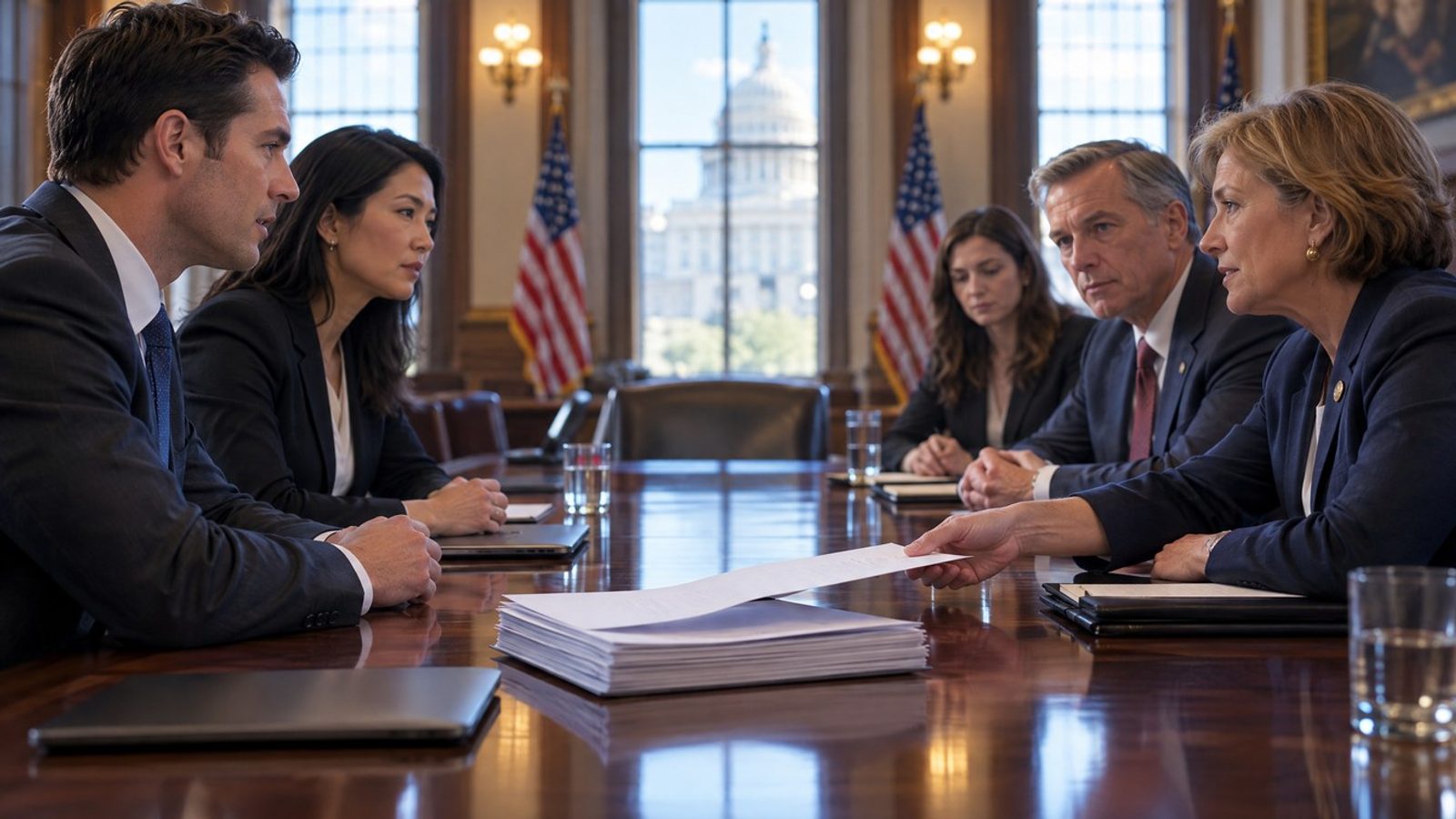
Anthropic has pitched a draft AI safety bill to lawmakers, proposing a $1 billion damage or 50-death threshold for government intervention. The bill would grant the U.S. Department of Commerce the sole authority to petition a federal court for a suspension of an AI model's development or deployment. According to reporting from Reuters and POLITICO, the draft has been circulating on Capitol Hill, but no lawmaker has introduced it as a formal bill.
The bill's core mechanism is narrower than most federal regulatory frameworks, focusing on three specific catastrophic scenarios: cyberattacks, models evading developer controls, and bioweapon creation or release. AI companies would be required to test their own models and publicly share the results, with independent evaluators conducting separate assessments.
The draft has sparked divergent interpretations from six outlets, including NewsCord, Mezha.net, Morocco World News, and Firstpost. Each outlet has framed the bill differently, highlighting the lack of consensus on AI regulation. The public's skepticism towards AI regulation, with 62% of U.S. adults reporting not too much or no confidence in the government's ability to regulate AI effectively, adds to the debate.
Why it matters
The bill's narrow focus and high thresholds have drawn criticism, with some arguing that the thresholds are too high and others questioning the bill's effectiveness in preventing AI-related harm. The debate highlights the challenges of regulating AI and the need for a comprehensive and consensus-driven approach.
For developers and startups, the bill's requirements for model testing and public disclosure could increase the burden of compliance. However, it could also provide a clear framework for AI development and deployment, reducing the risk of ad hoc regulations.
Investors may be concerned about the potential impact of the bill on AI companies' operations and growth prospects. However, the bill could also signal a willingness to engage with regulators and shape the future of AI policy, which could be seen as a positive sign for the industry.
Key facts
- Anthropic's draft AI safety bill proposes a $1 billion damage or 50-death threshold for government intervention.
- The U.S. Department of Commerce would be the sole authority to petition a federal court for a suspension of an AI model's development or deployment.
- The bill focuses on three specific catastrophic scenarios: cyberattacks, models evading developer controls, and bioweapon creation or release.
- AI companies would be required to test their own models and publicly share the results, with independent evaluators conducting separate assessments.
- Six outlets have framed the bill differently, highlighting the lack of consensus on AI regulation.
- 62% of U.S. adults report not too much or no confidence in the government's ability to regulate AI effectively, according to a Pew Research Center survey.
- The bill has not been introduced as a formal bill, and no lawmaker has scheduled a hearing or vote on it.
Context
Anthropic's draft AI safety bill arrives amidst a backdrop of competing approaches to AI oversight. The European Union has been phasing in its own AI Act, built around a tiered risk classification. Individual state legislatures in the U.S., such as California and Colorado, have also advanced state-level AI safety and transparency requirements.
Anthropic has been building a public case for the catastrophic risk of frontier AI, using this argument to justify its own internal safety testing regime and lobbying posture in Washington. The company's Advanced AI Framework, published earlier, laid out internal thresholds for when Anthropic itself would restrict or delay a model's release based on capability testing.
The debate surrounding Anthropic's draft AI safety bill highlights the challenges of regulating AI and the need for a comprehensive and consensus-driven approach. It also underscores the importance of public engagement and skepticism in shaping the future of AI policy.