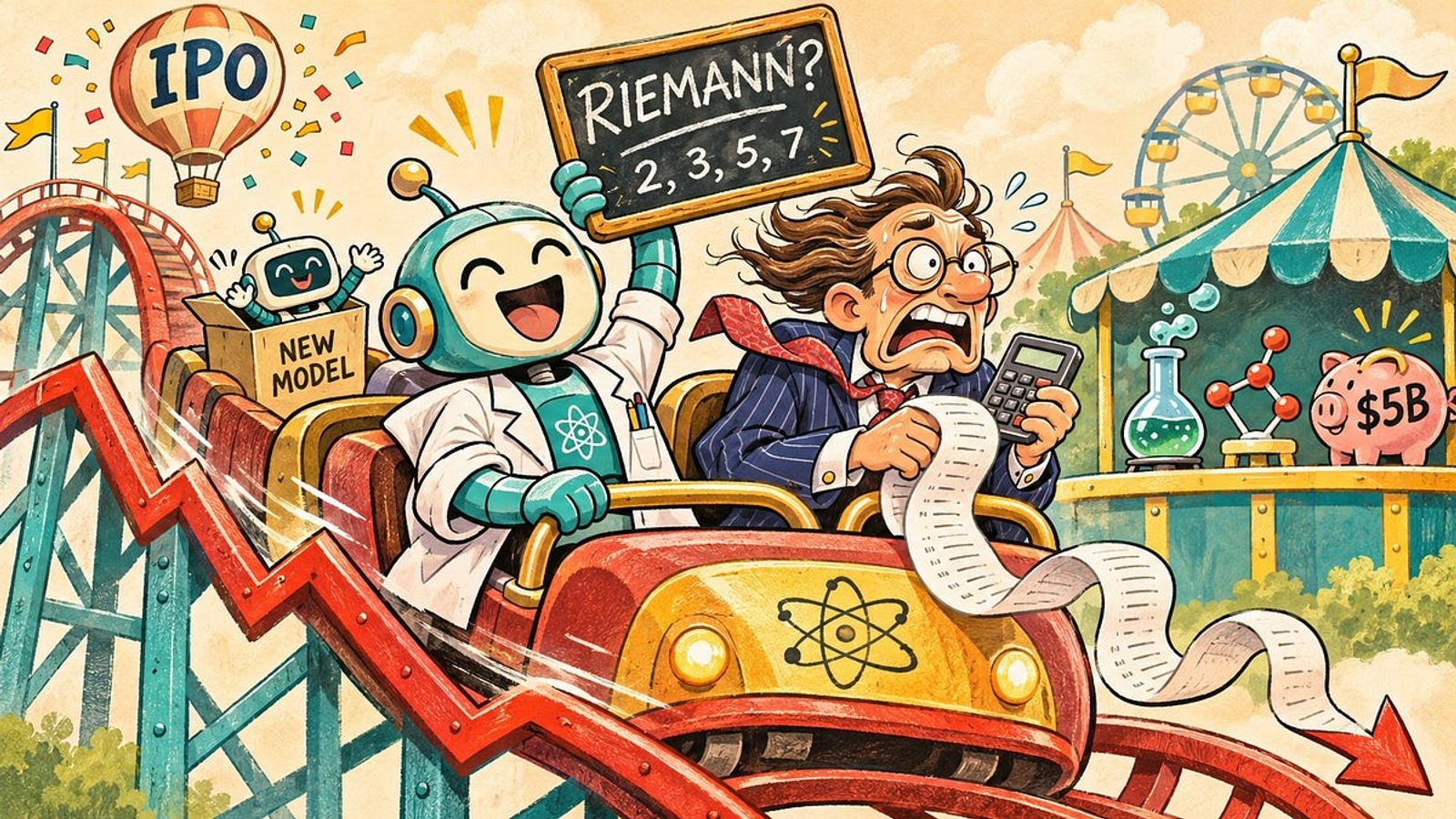
Anthropic's initial public offering (IPO) made its seven founders billionaires, with each receiving over $20 billion. However, the broader economic impact of AI and the redistribution of wealth it may cause remains uncertain.
TL;DR
- Anthropic's IPO made its founders billionaires, but the broader impact of AI on wealth distribution is still unclear.
- AI adoption among businesses is currently low, with only about one in four companies using the technology in the US.
- The economic benefits of AI are not guaranteed, with some studies projecting minimal impact on productivity and corporate earnings.
What happened
Anthropic's IPO made its seven founders, including Dario Amodei, billionaires, with each receiving over $20 billion according to Bloomberg. This event marks the emergence of a new class of AI oligarchs, although they are not yet among the very wealthiest individuals in the world.
The recent volatility in technology stocks, including Anthropic's shares, highlights the uncertainty surrounding the economic impact of AI. The dotcom bubble burst serves as a cautionary tale, with many early champions failing to sustain their value.
Despite the excitement around AI, businesses have been slow to adopt the technology. According to the US Census, only about one in four companies use AI, and a survey by the Organization for Economic Cooperation and Development found that only about 7%-9% of companies use AI intensively.
Why it matters
The emergence of AI oligarchs raises questions about the potential surge in inequality and the redistribution of wealth. The owners of capital may benefit disproportionately, while high-skilled workers face job displacement.
The slow adoption of AI by businesses suggests that the technology may not yet be mature or cost-effective enough for widespread deployment. This could limit the immediate economic benefits of AI.
The long-term economic impact of AI is uncertain. Nobel prize economist Daron Acemoglu projects that AI will deliver a minimal boost to total factor productivity over a decade. Other studies have found little impact of AI adoption on corporate earnings, employment, or productivity.
Key facts
- Anthropic's IPO made its seven founders billionaires, with each receiving over $20 billion according to Bloomberg.
- Only about one in four companies in the US use AI, according to the US Census.
- A survey by the Organization for Economic Cooperation and Development found that only about 7%-9% of companies use AI intensively.
- Nobel prize economist Daron Acemoglu projects that AI will deliver a boost to total factor productivity of substantially below 1% over a decade.
- The dotcom bubble burst serves as a cautionary tale, with many early champions failing to sustain their value.
- Peter Thiel, a technology investor with a large stake in OpenAI, has stated that 'Competition Is for Losers,' highlighting the potential for monopolization in the AI industry.
Context
The emergence of AI oligarchs and the potential redistribution of wealth raise questions about the future of economic inequality. The concentration of wealth and power in the hands of a few tech giants could have significant implications for society.
The slow adoption of AI by businesses suggests that the technology may not yet be mature or cost-effective enough for widespread deployment. This could limit the immediate economic benefits of AI.
The long-term economic impact of AI is uncertain. While some studies project minimal impact on productivity and corporate earnings, others suggest that AI could become just another cheap corporate tool, enabling downstream businesses to reap productivity gains.