OpenAI is offering 50,000 new ChatGPT research grants, opening applications on November 23. The expansion doubles the program's reach to 200,000 researchers, with a shift to first-come, first-served access.
TL;DR
- OpenAI's ChatGPT for Academic Researchers program expands to 50,000 new grants, opening November 23.
- Coding shows the largest time savings, with tasks estimated to take 2.83 times longer without AI.
- The expansion shifts to first-come, first-served access and includes ChatGPT Plus for recipients and collaborators.
What happened
OpenAI has announced 50,000 new ChatGPT research grants, with applications opening on November 23. The program, now in its second round, aims to support 150,000 researchers in this phase, doubling its overall ambition to reach 200,000 researchers worldwide.
The expansion changes the selection process to a first-come, first-served basis, replacing the previous lottery system. New recipients will receive ChatGPT Plus access for themselves and up to two collaborators, a change from the Pro subscription offered during the pilot.
Why it matters
The expansion reflects OpenAI's commitment to supporting academic research with AI tools. The shift to first-come, first-served access aims to streamline the process and extend support to more research teams.
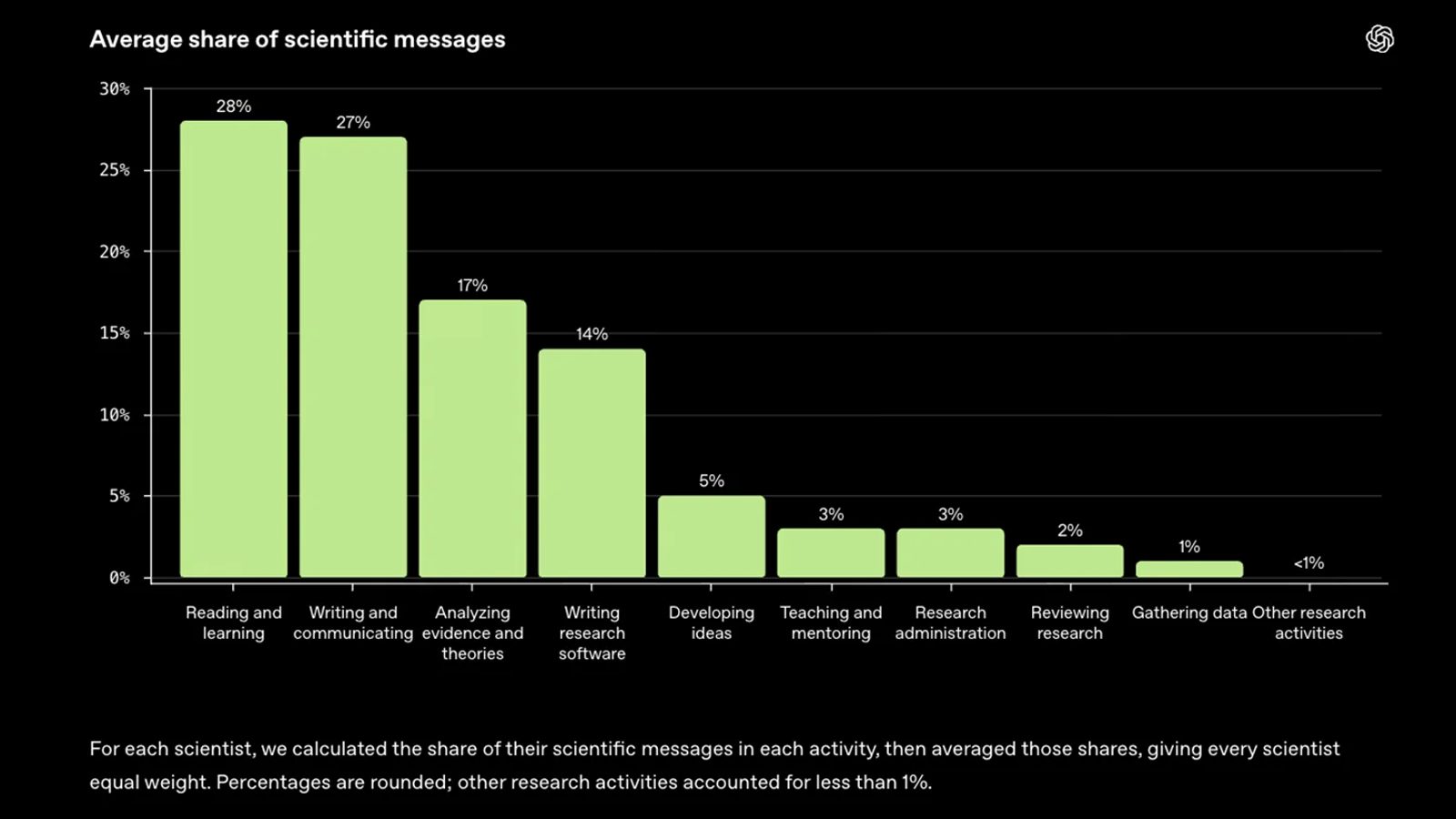
The program's expansion comes alongside a study showing significant time savings for researchers using ChatGPT, particularly in coding and software development. This highlights the potential for AI to accelerate research workflows and enable new types of scientific inquiry.
Key facts
- Applications open on November 23 for 50,000 new ChatGPT research grants.
- The program aims to support 150,000 researchers in this round, doubling its overall reach to 200,000 researchers.
- Grants will be allocated on a first-come, first-served basis, replacing the previous lottery system.
- Recipients will receive ChatGPT Plus access for themselves and up to two collaborators.
- The study found that tasks completed with AI would have taken about 1.9 times as long without it, with coding showing the largest time savings at 2.83 times.
- The largest reported gain was in research software and code development, while administrative work had the smallest reported gain at 1.35 times.
- The study surveyed 270 valid responses, with 251 participants consenting to inclusion in the analysis.
- OpenAI has also published a research paper, Science at the Frontier: How Scientists Use ChatGPT, detailing the findings.
Context
OpenAI's ChatGPT for Academic Researchers program has been running since July, with 20,000 researchers in 33 countries participating in the pilot. The program provides access to OpenAI's models and training on using ChatGPT in research.
The expansion comes as AI tools are increasingly being integrated into scientific workflows, with potential implications for research productivity and innovation. The study's findings highlight both the opportunities and challenges of using AI in research, including the need for careful checking of AI outputs.