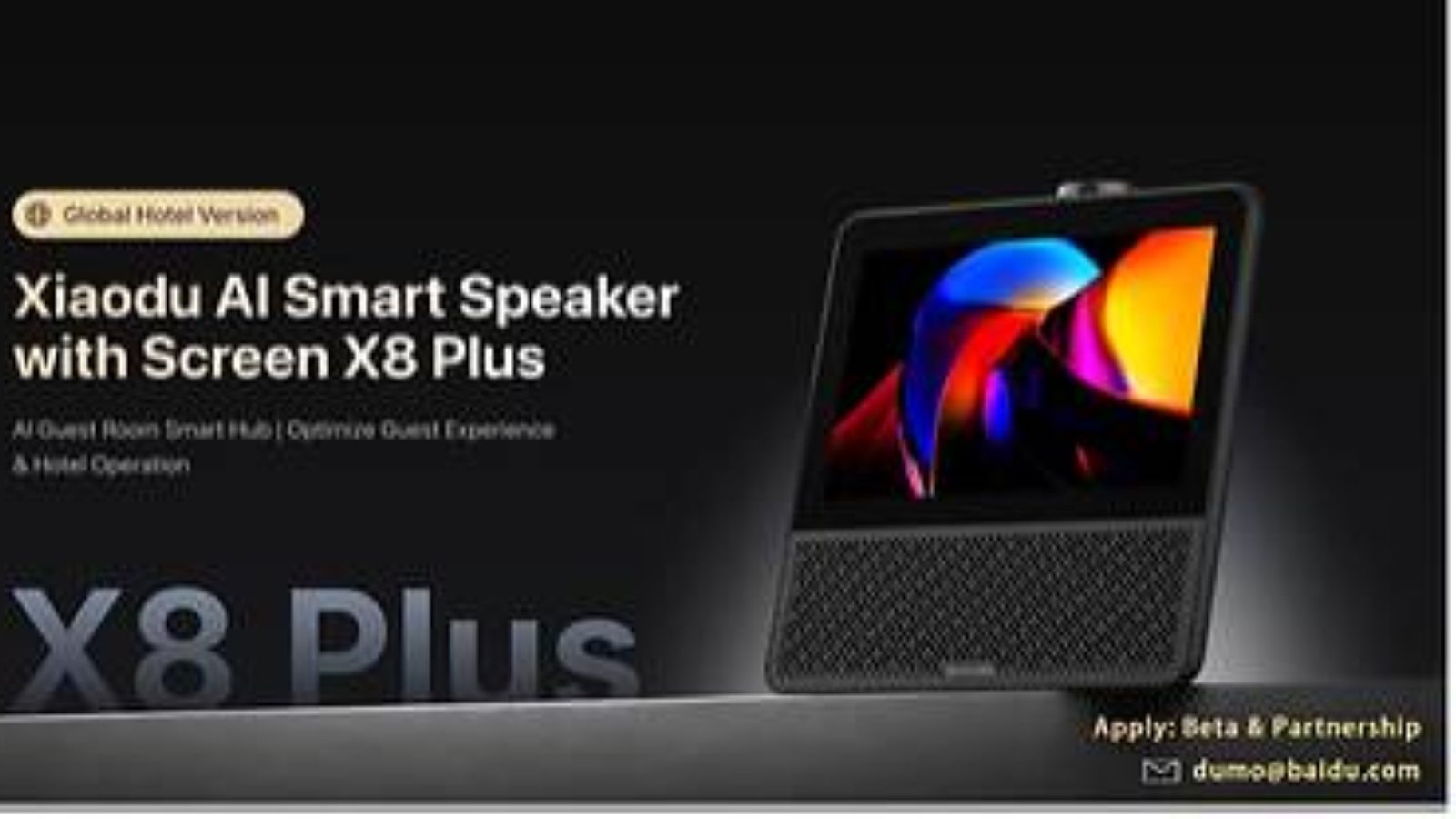
Xiaodu Technology, Baidu's AI hardware subsidiary, has launched its first overseas AI Smart Speaker with Screen, the X8 Plus, targeting Southeast Asia's mid-to-high-end hotels. The move follows Xiaodu's April 2026 globalization strategy and serves over 90,000 hotels in China.
TL;DR
- Xiaodu's X8 Plus AI speaker launches overseas, targeting Southeast Asia's hotels.
- The speaker is part of Xiaodu's globalization strategy, following its dominance in China's hotel market.
- X8 Plus features hardware, intelligent, and ecosystem upgrades for overseas deployment.
What happened
Xiaodu Technology, a subsidiary of Baidu, has launched its first AI Smart Speaker with Screen for overseas markets, the X8 Plus. The product targets international mid-to-high-end hotels and Chinese hotel brands expanding overseas in Southeast Asia.
The launch follows Xiaodu AI Hotel's globalization strategy announced in April 2026, which aims to bring its 'AI + Hotel' solution to Southeast Asia. The X8 Plus is the first hardware product deployed in overseas markets under this strategy.
Xiaodu has formed a strategic partnership with Malaysian operator redONE to deploy AI hardware and digital solutions in hotel real estate, smart home, and other sectors. This partnership marks a shift from exporting products to building overseas application ecosystems.
Why it matters
The launch of X8 Plus is a significant step in Xiaodu's global expansion, moving from solution delivery to standardized product deployment. It expands Xiaodu's overseas product portfolio while laying the groundwork for integration with more hotel systems, devices, and local ecosystems.
For developers and startups, the X8 Plus offers a glimpse into Xiaodu's technological advancements in AI hardware and its potential for integration with other systems. The speaker's features, such as its adaptive dual-band Wi-Fi and multilingual capabilities, could influence the development of similar products in the market.
Investors should take note of Xiaodu's strategic shift towards building overseas application ecosystems. The company's dominance in China's hotel market, with a market share exceeding 90%, indicates its potential for success in overseas markets. However, the company will face competition from local and international players in Southeast Asia.
Key facts
- Xiaodu Technology serves over 55 million households in China.
- Xiaodu's AI Hotel solution covers more than 90,000 hotels and 3 million rooms in China, with a market share exceeding 90%.
- The X8 Plus features built-in infrared transmission/reception and temperature and humidity sensing, with adaptive dual-band support for 2.4GHz/5GHz Wi-Fi.
- The speaker offers enhanced large language model (LLM) semantic understanding and multilingual capabilities, with smooth English voice interaction and support for Thai and other languages in the future.
- The X8 Plus is deeply integrated with hotel RCU (Room Control Unit) systems, enabling coordinated control of in-room devices and remote debugging for streamlined deployment.
- Xiaodu has formed a strategic partnership with Malaysian operator redONE for AI hardware and digital solutions deployment in hotel real estate and smart home sectors.
Context
Xiaodu's launch of the X8 Plus AI speaker is part of a broader trend of Chinese tech companies expanding into overseas markets. As these companies seek to grow beyond their domestic markets, they are increasingly looking to Southeast Asia, with its large and growing population, as a key region for expansion.
The launch also highlights the growing importance of AI in the hospitality industry. As hotels seek to enhance the guest experience and improve operational efficiency, they are increasingly turning to AI-powered solutions. Xiaodu's X8 Plus, with its advanced features and ecosystem integration, is well-positioned to meet these needs.
However, Xiaodu will face competition from both local and international players in the Southeast Asian market. Companies like Google, Amazon, and local startups are also investing heavily in AI and smart home technologies. Xiaodu's success will depend on its ability to differentiate its products and build strong partnerships with local players.